
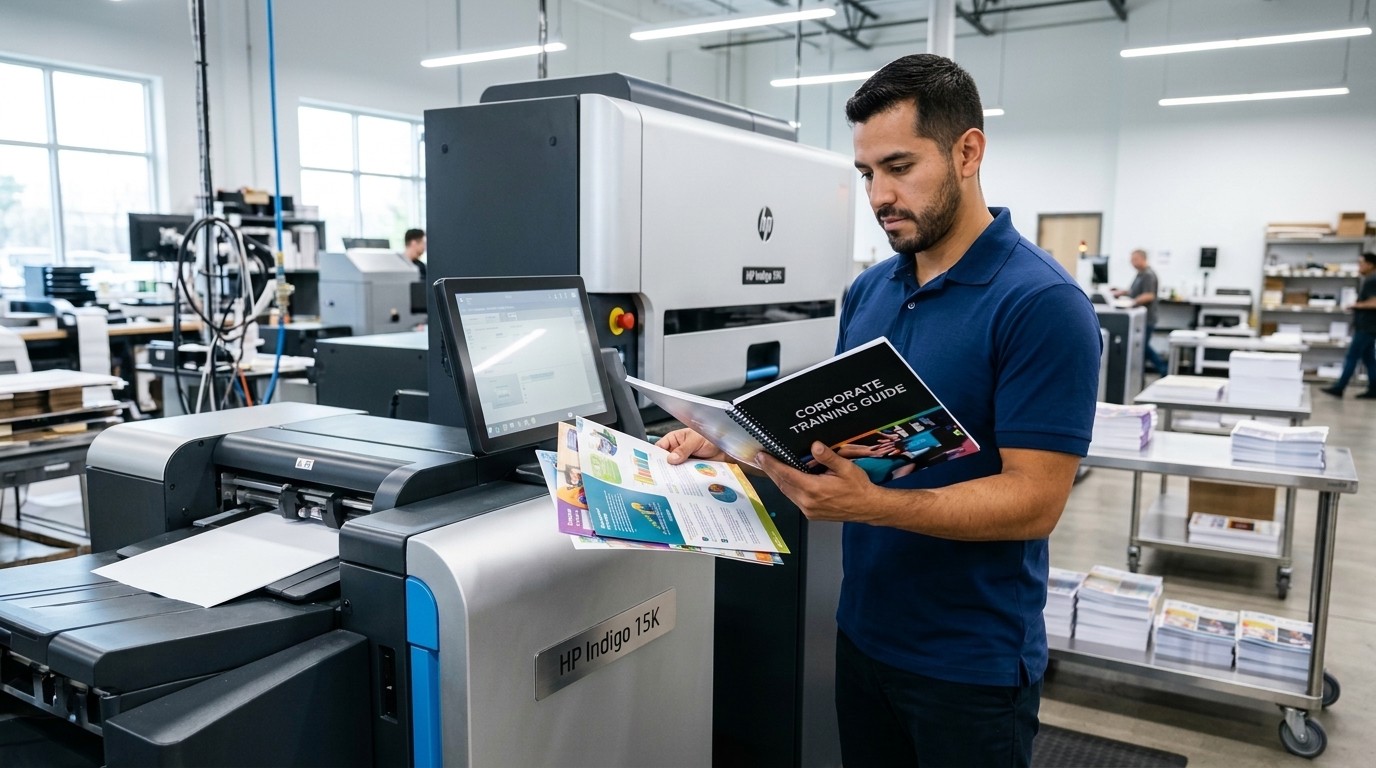
Ordering a full year’s supply of printed collateral in a single bulk press run often looks attractive on a spreadsheet because it lowers the theoretical price per piece. Yet in practice, chasing rock-bottom unit costs frequently costs organizations far more overall when regulations shift, pricing changes, or dozens of cartons sit untouched in a storage closet. Print on demand (POD) empowers organizations to produce the exact materials they need, in the exact quantities required, right when they need them.
What Is the True Cost of Overprinting Marketing and Operational Materials?
While bulk printing lowers the initial cost per unit, industry studies consistently show that 25% to 35% of bulk-printed corporate collateral becomes obsolete before it is ever distributed. Print on demand shifts procurement focus from the lowest theoretical unit price to the lowest Total Cost of Ownership (TCO) by eliminating storage overhead, rush reprint waste, and outdated inventory write-offs.
A low unit price on a 10,000-piece press run rarely accounts for the hidden operational drags that accumulate after delivery:
- Warehousing & Climate-Controlled Storage: Paper stock absorbs ambient humidity and occupies valuable square footage in corporate offices or fulfillment centers.
- Internal Handling & Labor: Receiving, counting, shelving, and manually picking cartons diverts staff from revenue-generating work.
- Damaged & Dog-Eared Stock: Partially opened cartons suffer bent corners, toner scuffing, and moisture curl over months of storage.
- Sudden Content Obsolescence: If a regional phone number, employee benefit tier, technical specification, promotional offer, or regulatory disclosure changes, remaining cartons lose 100% of their value overnight.
How Commercial Print on Demand Works
A modern print-on-demand program stores preflighted, brand-approved digital master files and produces finished pieces in targeted quantities as orders are triggered. Powered by our HP Indigo 15K digital offset press, emediagroup produces short- and medium-run collateral with true liquid-ink offset quality—without the aluminum plate charges or lengthy makeready waste of legacy presses.
Orders can be initiated centrally by marketing and operations leaders or placed directly by authorized branch locations, human resources teams, sales representatives, franchisees, or event coordinators. Once triggered, materials are printed, bound or finished, kitted, and shipped directly to a single headquarters or distributed across dozens of regional destinations.
Many Upstate organizations adopt a hybrid inventory strategy: high-velocity evergreen pieces maintain a lean base safety stock for same-day pick-and-pack, while versioned, seasonal, or compliance-sensitive documents are produced strictly on demand.
Which Products Perform Best in a Print-on-Demand Program?
Print on demand excels whenever documents undergo frequent revisions, require localized versions across multiple offices, or serve unpredictable demand spikes. Each SKU in your print catalog should be evaluated by usage velocity and revision risk:
| Production Model | Ideal Order Volume | Revision Frequency | Best-Fit Collateral Types | Inventory Obsolescence Risk |
|---|---|---|---|---|
| Pure Print on Demand (HP Indigo) | 25 – 1,500 units | High (Monthly / Quarterly) | Training manuals, price lists, onboarding kits, localized sales sheets, event packets | Near Zero (Printed to order) |
| Hybrid Base + On-Demand | 500 – 5,000 units | Moderate (Semi-Annual) | Pocket presentation folders with custom inserts, multi-branch brochures, compliance forms | Low (Controlled buffer stock) |
| Conventional High-Volume Run | 5,000+ units | Low (Annual or Evergreen) | Unchanging product catalogs, universal packaging inserts, high-volume mailers | Moderate to High if specs change |
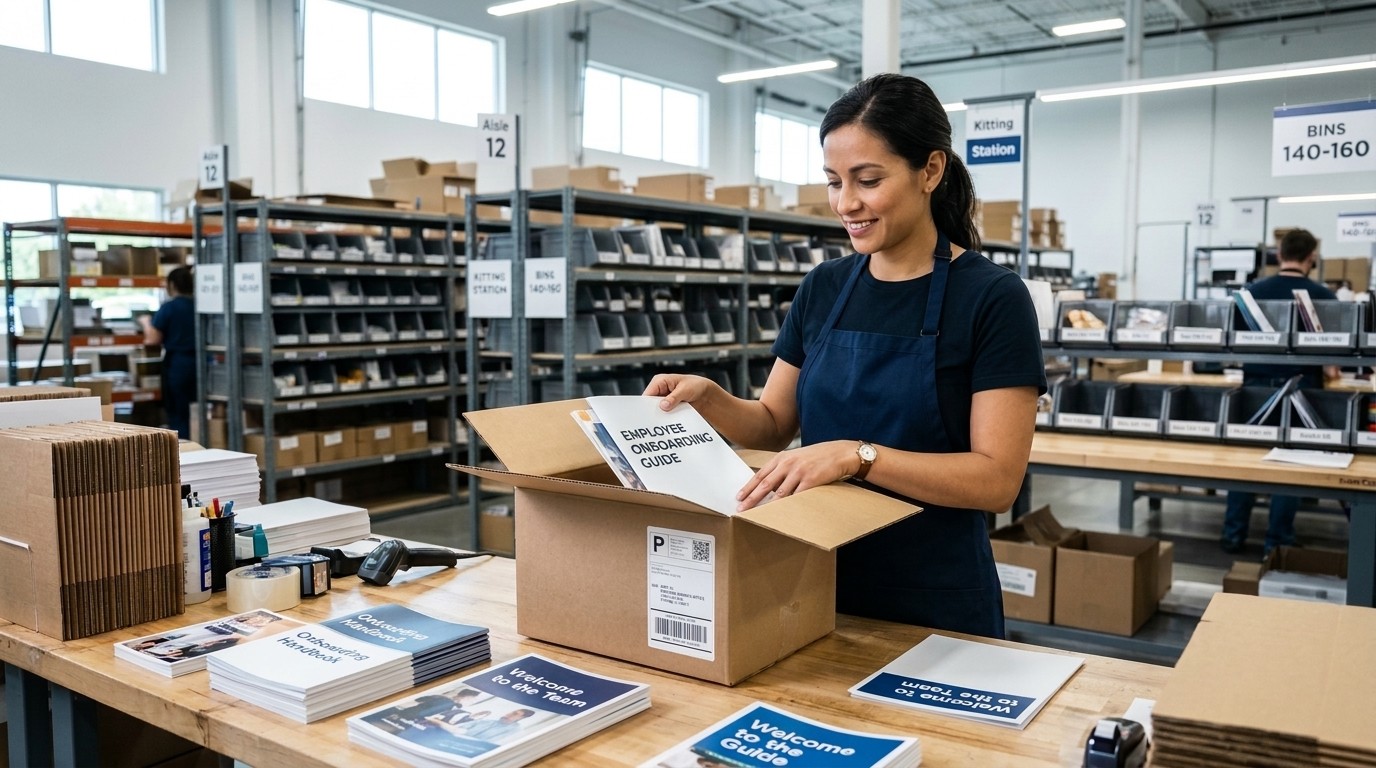
Protect Your Brand While Giving Local Teams Flexibility
Decentralized ordering is a major headache for multi-location businesses. Left to fend for themselves, regional branches often use outdated logos, make unauthorized layout edits, or hire unvetted copy shops—resulting in wild color shifts and inconsistent paper stocks.
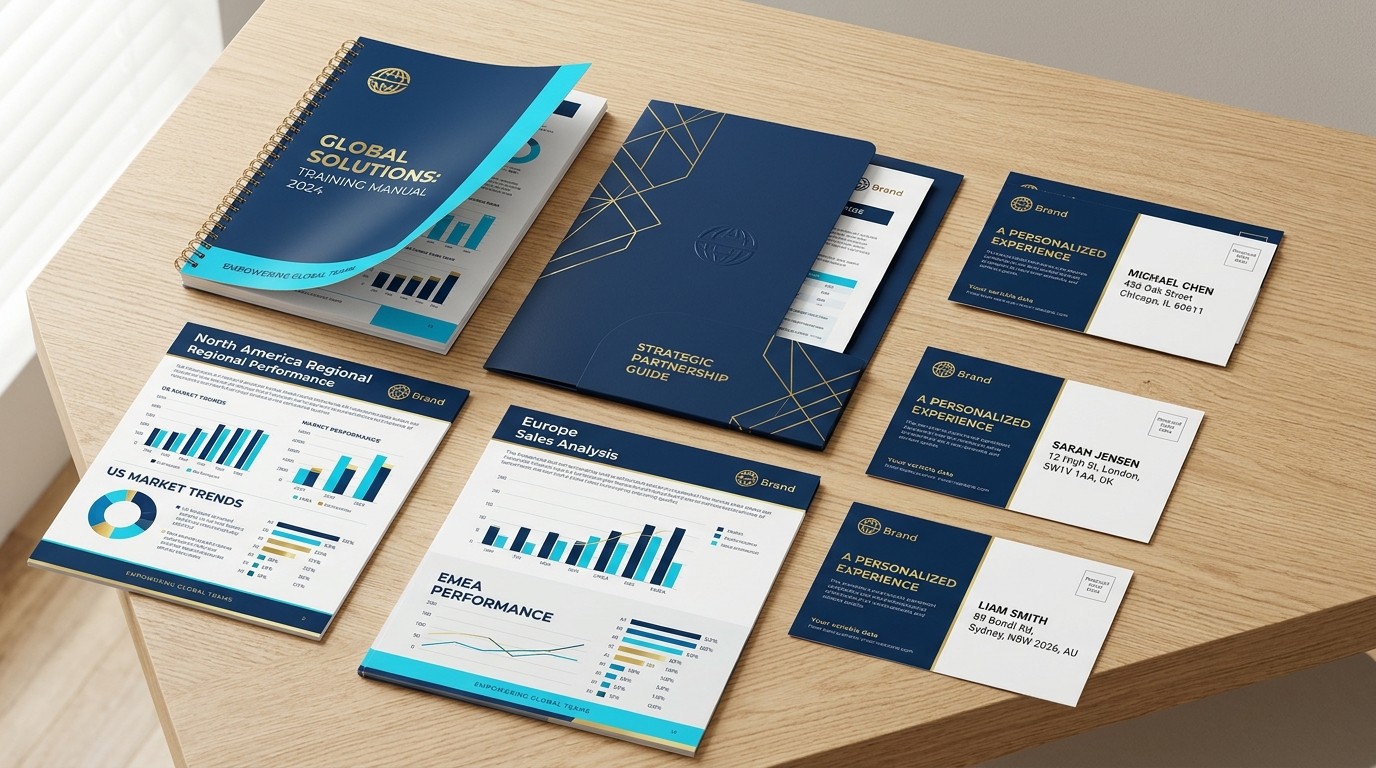
A managed print-on-demand workflow gives authorized field users fast access to current collateral while locking down core brand standards. Using variable data rules and structured templates, organizations can lock typography, corporate palettes, and legal disclaimers while permitting controlled customization for:
- Branch Address & Regional Map
- Direct Phone Number & QR Code Destination
- Sales Representative Name, Photo & Credentials
- Event Dates, Venue Details & Local Promotional Offers
- Direct-to-Site Shipping Destinations
Because emediagroup operates as a G7® Master Qualified Facility aligned with Idealliance G7 color standards, a 100-piece reorder printed in November matches the exact neutral gray balance and corporate Pantone builds of a 2,000-piece run produced six months earlier.
What to Define Before Launching Your Print-on-Demand Program
Transitioning from reactive bulk ordering to a streamlined print-on-demand system starts with a structured collateral audit. Gather every active printed item across your departments and document annual usage, ordering cadence, current warehouse stock, revision frequency, and storage cost. Then establish eight operational guardrails:
- User Permissions & Role Access: Define which branch managers, recruiters, or sales reps can place orders directly.
- Approval Workflows: Set automated sign-off rules for orders exceeding specified quantity or budget thresholds.
- Minimum & Maximum Order Quantities: Establish sensible batch tiers (e.g., packs of 25, 50, or 100) to prevent single-sheet inefficiencies.
- Standardized Substrates & Finishing: Lock in paper weights, soft-touch lamination, coil binding, or saddle-stitch specs for seamless repeatability.
- Departmental & Location Billing: Route invoices or cost-center allocations automatically by branch or division.
- Turnaround & Shipping Expectations: Define standard production windows and multi-address distribution protocols.
- Reorder & Low-Stock Notifications: Set automated alerts for hybrid items that maintain a base safety buffer.
- Master File Ownership: Assign clear responsibility for uploading revised PDFs and retiring outdated versions immediately.
Print What You Need, When You Need It With emediagroup
Print on demand eliminates obsolete paper waste, reclaims valuable storage space, accelerates go-to-market turnaround, and ensures every customer-facing document reflects your latest information.
From our production facility in Greenville, SC, emediagroup integrates HP Indigo digital printing, variable data personalization, precision bindery finishing, and turnkey fulfillment to support scalable print-on-demand programs for organizations across the Upstate and nationwide. Explore our Commercial Print Solutions, call 877.866.7223 or (864) 232-4604, or reach out through our Contact Page to design a smarter inventory program for your team.

0 Comments