
The best custom event shirt is never just a basic corporate logo slapped on a bargain t-shirt. Garment choice, fabric blend, ink chemistry, artwork separation, and size curve distribution all dictate whether your shirt gets worn once and forgotten—or becomes a treasured favorite worn for years.
How Do You Select the Right Garment for Your Event?
Choosing the ideal garment begins by identifying the end user's physical environment. High-exertion athletic events demand lightweight, moisture-wicking synthetic polyesters, while casual community volunteers and corporate teams prefer ultra-soft ringspun cotton or durable tri-blends that maintain retail-quality drape and shape across dozens of wash cycles.
Matching the garment to the audience transforms custom apparel from a temporary marketing expense into a long-term brand asset. For organizations across the Upstate, understanding the performance trade-offs between cotton, polyester, and hybrid blends is the first step toward ordering apparel people love to wear.
Fabric Selection: Cotton, Polyester, and Modern Blends
Not all t-shirt fabrics respond to screen printing inks the same way. When curating your event apparel catalog, consider these primary textile categories:
- 100% Combed Ringspun Cotton: Substantially softer and smoother than carded open-end cotton. Provides a tight, flat weave that produces crisp graphic line work and vibrant color reproduction. Perfect for festival merchandise, concert tees, and community walk events.
- 100% Performance Polyester: Essential for endurance road races, trail runs, and summer athletics. Wicks perspiration away from the body but requires specialized low-bleed polyester inks with barrier underbases to prevent dye migration.
- 50/50 & Tri-Blend Fabrics (Cotton/Poly/Rayon): The gold standard for modern retail-fashion comfort. Tri-blends offer exceptional drape, breathability, and natural vintage heather textures that feel broken-in right out of the box.
Garment Fabric & Ink Performance Matrix
| Fabric Construction | Touch & Feel | Breathability | Best Printing Method | Recommended Event Profile |
|---|---|---|---|---|
| Ringspun Cotton (4.3 oz.) | Ultra-Soft / Smooth | Medium | Plastisol or Water-Based Discharge | Corporate retreats, casual races, expos |
| Poly Interlock (3.8 oz.) | Silky / Athletic | Maximum (Moisture-Wicking) | Low-Cure Poly Inks / Dye Sublimation | Marathons, 10Ks, cycling, obstacle runs |
| Tri-Blend Jersey (Rayon Blend) | Featherweight / Broken-In | High | High-Solid Acrylic / Vintage Choke | Staff uniforms, retail merch, brand swag |
| Heavyweight Cotton (6.0 oz.) | Structured / Boxy | Moderate | Standard Opaque Plastisol | Construction crews, field staff, volunteers |
Ink Chemistry: Plastisol vs. Water-Based Inks
The screen printing ink formula you select determines the physical texture—known in the apparel industry as the "hand feel"—of your finished garment:
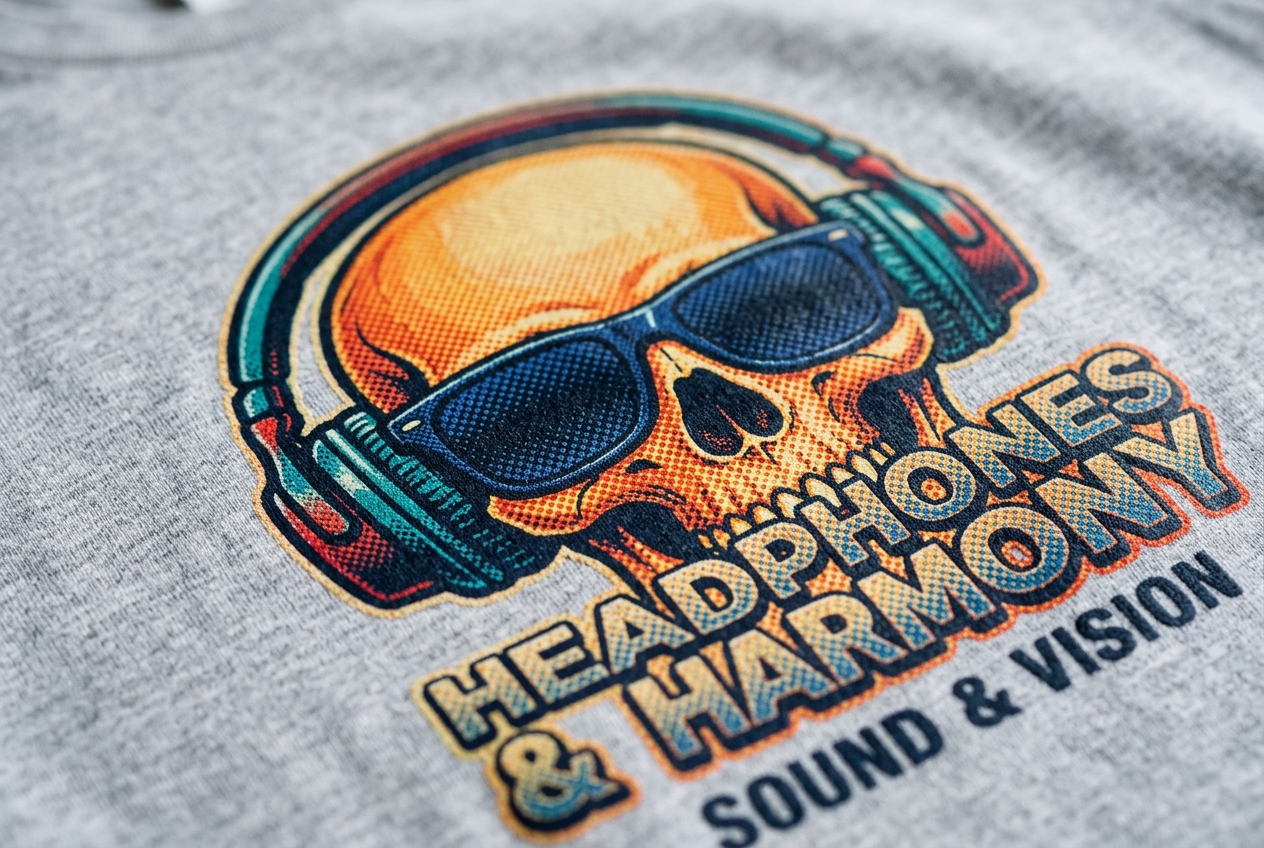
- Traditional Plastisol Inks: The durable commercial standard. Plastisol sits on top of fabric fibers, delivering exceptionally opaque colors, Pantone spot-color precision, and heavy wash durability. To prevent large chest prints from feeling like stiff plastic "shields," commercial printers utilize high mesh counts and specialized soft-hand reducers.
- Water-Based & Discharge Inks: Water-based pigments penetrate deep into garment fibers rather than sitting on top. Once heat-cured according to PRINTING United Alliance apparel standards, the print becomes virtually weightless and breathable—ideal for hot-weather race shirts and premium boutique retail apparel.
Preparing Artwork for Production-Grade Screen Printing
Screen printing requires creating physical mesh screens for each individual color in your design. Translating digital graphic files to apparel demands disciplined art preparation:
- Vector Artwork Preferred: Provide native vector files (.AI, .EPS, or print-ready .PDF) with all type converted to outlines. Raster graphics should be created at 300 DPI at actual print dimensions.
- Strategic Color Economy: Every additional ink color adds setup screens and press registration steps. Designing strong 1- to 3-color graphics often yields cleaner, higher-impact designs while keeping budget under control.
- Dark Garment Underbases: When printing vibrant colors on dark fabrics (black, navy, charcoal), a flash-cured white underbase plate is essential so overlying colors appear true to Pantone specifications without muddy fabric bleed.
Mastering the Sizing Curve: Preventing Event Surpluses
One of the costliest errors event directors face is running out of popular sizes while getting left with boxes of unwearable leftovers. Avoid arbitrary guessing by adhering to verified sizing bell curves:
- Standard Adult Co-Ed Field: S (10%), M (25%), L (30%), XL (25%), 2XL (10%).
- Women's-Cut Running Events: S (25%), M (35%), L (25%), XL (15%).
- Corporate & Field Staff: M (20%), L (35%), XL (30%), 2XL (15%).
Always order a 5% to 8% buffer across core sizes (M, L, XL) to accommodate race-day exchanges, last-minute VIP attendees, and key sponsors.
Your Greenville Screen Printing Partner
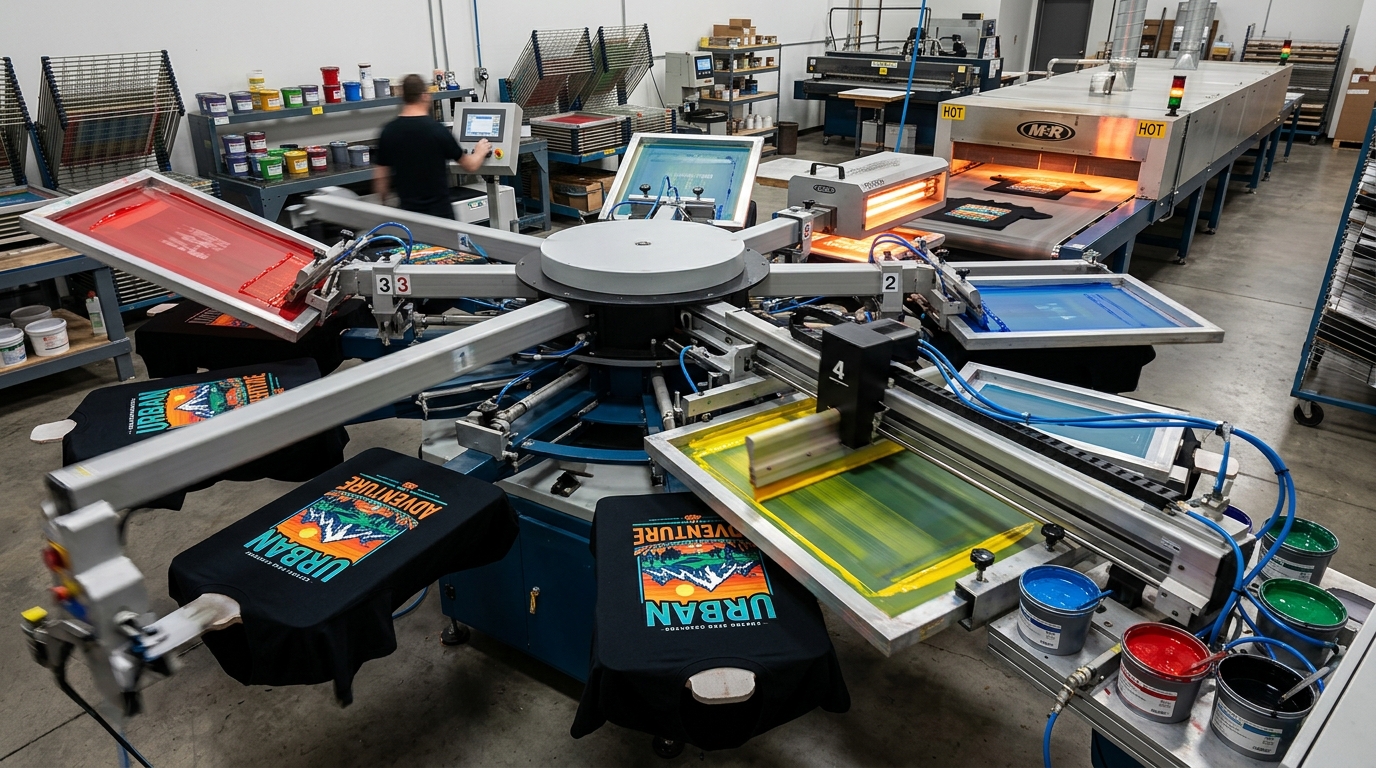
At emediagroup, our Greenville, South Carolina production facility operates state-of-the-art automatic textile presses capable of producing thousands of retail-quality garments daily. From soft-hand marathon finisher tees to heavyweight corporate uniforms and multi-color festival merchandise, we maintain rigorous G7 color matching and on-time turnaround.
Explore our full apparel catalog and decoration techniques on the emediagroup Screen Printing page to start your custom project.
Frequently Asked Questions
What is the minimum order quantity for custom screen printing?
Due to the screen creation and press setup involved in commercial screen printing, production runs typically start at 24 to 48 pieces per design. Price per shirt decreases significantly as volume scales into hundreds or thousands of units.
How do I prevent screen printed designs from cracking over time?
Ink cracking is caused by under-curing during production or excessive heat drying at home. Professional textile shops utilize calibrated conveyor infrared dryers to ensure ink achieves complete polymerization (typically 320°F). Washing garments inside-out in cold water and tumble-drying on low heat preserves print vibrancy for years.
Can you screen print on 100% polyester moisture-wicking shirts?
Yes. Printing on synthetic polyester requires specialized low-bleed, low-cure inks and bleeding blocker underbases to stop synthetic dye gases from migrating into the printed ink film during heat curing.
Create Custom Apparel Your Participants Will Keep
Whether you need 100 soft-touch shirts for a corporate volunteer day or 5,000 moisture-wicking finisher singlets for a regional marathon, our Greenville team delivers certified quality on tight deadlines.
Contact the emediagroup Apparel Team today or call 877.866.7223 to review garment samples, discuss ink techniques, and receive an upfront quote.

0 Comments